This Is What Happens When You Slow Down in Gwangju
You know that feeling when a place just gets you? Gwangju isn’t about ticking boxes or rushing to the next hotspot. It’s about wandering through quiet alleys, catching sunlight on old tiles, and stumbling upon gardens tucked behind temple walls. I spent a week moving slowly through this underrated Korean city, and honestly? It changed how I travel. From riverside paths to hillside villages, Gwangju’s scenic spots reveal themselves only when you’re ready to pause—and breathe. There’s a rhythm here that doesn’t demand your attention; it simply waits for you to notice. In a world that glorifies speed, Gwangju offers something rare: the permission to move gently, observe deeply, and connect authentically.
Why Gwangju? Rethinking Korea’s Underrated Gem
Gwangju often escapes the radar of international travelers, overshadowed by Seoul’s glittering skyline or Busan’s coastal charm. Yet this inland city in South Korea’s Jeolla Province holds a quiet power—an identity shaped not by tourism metrics but by resilience, creativity, and harmony with nature. Historically significant as a center of democratic movement, Gwangju has channeled its spirit into cultural expression, making it one of the country’s most artistically vibrant cities. Unlike destinations designed for mass tourism, Gwangju invites engagement on a human scale. Its streets don’t echo with tour guides’ megaphones; instead, they hum with the everyday life of residents tending gardens, cycling to work, or sipping tea in corner cafés.
What makes Gwangju ideal for slow travel is its balanced pace. It’s large enough to offer rich layers of history and culture, yet small enough that you can navigate it without exhaustion. Public transportation is reliable, with an efficient bus system connecting major districts and nearby natural areas. The city is also highly walkable, especially in neighborhoods like Chungjang-ro and Hwangnam-dong, where wide sidewalks, tree-lined avenues, and pedestrian-friendly zones encourage unhurried exploration. For those arriving from Seoul, a KTX high-speed train brings you to Gwangju Station in just over two hours, offering a seamless transition from urban rush to contemplative calm.
Importantly, Gwangju does not cater to checklist tourism. There are no artificial attractions built solely for visitors, no overcrowded observation decks requiring timed entry. Instead, its beauty emerges organically—in the curve of a stone bridge over a clear stream, in the hand-painted sign above a family-run bakery, in the way morning light filters through ginkgo trees along a residential lane. This authenticity is precisely what draws travelers seeking depth over spectacle. By choosing Gwangju, you’re not just visiting a new place—you’re stepping into a different way of being, one that values presence more than productivity.
The Charm of Moving Slow: How Pacing Transforms Perception
Slow travel is more than a trend; it’s a mindset shift. It means resisting the urge to see everything in a single day and instead allowing yourself to truly experience one thing at a time. In Gwangju, this approach isn’t just rewarding—it feels natural. The city’s energy doesn’t push you forward; it welcomes you to linger. During my stay, I abandoned my usual habit of scheduling every hour. I left my map behind more often than not, opting instead to follow footpaths that curved around hills or led into clusters of traditional houses. What I discovered was that slowing down didn’t mean doing less—it meant noticing more.
Psychologically, the effects were immediate. Without the pressure of a packed itinerary, my stress levels dropped. My senses sharpened. I began to register details I would have otherwise missed: the sound of wind brushing through bamboo groves near Jeungsimsa Temple, the scent of roasted barley tea drifting from an open café window, the way elderly neighbors greeted each other by name every morning. Research supports this experience—studies show that slower-paced environments reduce cortisol levels and enhance cognitive clarity. When we move slowly, we become more attuned to our surroundings, which deepens emotional connection and memory retention.
More than personal well-being, slow travel fosters genuine cultural exchange. Rushing through a destination keeps interactions transactional—buying food, asking for directions, snapping photos. But when you stay longer in one place, relationships begin to form. A shopkeeper starts recognizing you. A park regular nods as you pass. These small moments build trust and openness, creating space for meaningful dialogue. In Gwangju, I found that people were not performing for tourists; they were simply living. And by slowing down, I was granted a quiet window into their world—one that no guidebook could have provided.
Mudeungsan Mountain & Its Hidden Trails: Nature at Your Own Pace
Rising gently above the city skyline, Mudeungsan National Park is Gwangju’s green crown. Designated a UNESCO Global Geopark, this mountain range offers over 30 kilometers of trails winding through volcanic rock formations, ancient forests, and serene valleys. While some visitors head straight for the summit via the main route, the true magic lies in the lesser-known paths—routes like Cheomseongdae and Ssangbongi, where foot traffic is light and the forest feels untouched. These trails don’t promise panoramic views at every turn, but they reward patience with intimacy: a clearing where sunlight dapples the moss, a hidden shrine nestled among boulders, the sudden call of a pheasant breaking the silence.
One morning, I started my hike at the Ssangbongi entrance just after sunrise. The air was crisp, carrying the faint sweetness of blooming azaleas—a sign that spring had fully arrived. As I climbed, the city faded behind me, replaced by layers of green and the occasional glimpse of granite cliffs shaped by centuries of erosion. What struck me most was the stillness. No loud conversations, no music from speakers—just the rhythm of my footsteps and the rustle of leaves. Halfway up, I paused at a resting platform where an older couple sat sharing rice cakes. They smiled and offered me a piece, speaking in gentle tones I couldn’t fully understand but whose kindness needed no translation.
Each season paints Mudeungsan in a different light. In autumn, the hills blaze with crimson and gold as maple leaves blanket the trails. Winter brings a hush, with frost-laced branches and distant views of snow-dusted peaks. Even summer, though warm, offers cool relief under dense canopies. For those planning a visit, the best entry points include the Dongseo University trailhead for beginners and the Pyeongdong entrance for more experienced hikers. Trails are well-marked with signage in Korean and English, and estimated walking times are posted at each junction. A light backpack with water, snacks, and a rain jacket is all you need—there’s no need for technical gear. The key is not speed, but awareness. When you hike slowly, you stop seeing nature as a backdrop and start feeling it as a living presence.
Gwangju’s Riverside Walks: Where City Meets Serenity
If Mudeungsan offers escape, the riverside paths of Gwangju provide balance—a seamless blend of urban life and natural calm. The Yeosu Line, a converted rail trail along the Yeosu Stream, is a favorite among locals for morning jogs, evening strolls, and weekend bike rides. Unlike manicured boardwalks in larger cities, this path feels organic. It winds past reed beds, under wooden footbridges, and alongside small vegetable plots tended by nearby residents. Benches are thoughtfully placed at intervals, inviting rest and reflection. Some have hand-carved inscriptions with poems or proverbs about peace and patience—gentle reminders to slow down.
Another beloved stretch runs through Hwangnam-dong, where the river widens and the water runs clear. Families gather on weekends to feed ducks, children chase bubbles blown by street vendors, and couples sit side by side watching the light shift on the surface. The design of these spaces encourages lingering. Low stone walls allow easy access to the water’s edge. Public art installations—sculptures made from recycled materials, mosaic tiles set into walkways—add subtle points of interest without overwhelming the landscape. At dusk, solar-powered lanterns flicker on, casting soft glows across the path.
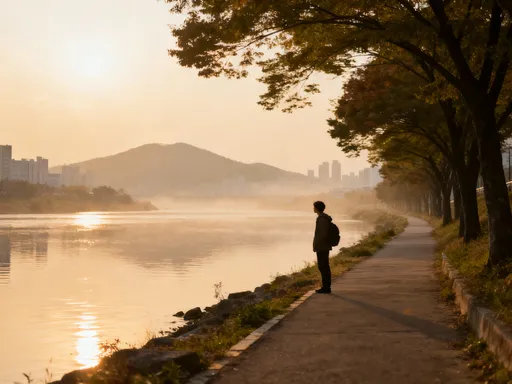
The best time to walk these routes is during golden hour, just before sunset, when the sky melts into hues of amber and rose. The air cools, the crowds thin, and the city takes on a dreamlike quality. I made it a ritual to walk the same stretch each evening, noticing how the scene changed slightly each day—a new flower blooming by the path, a heron standing motionless in the shallows, a group of students playing guitar on a bridge. These small, unscripted moments became the heart of my journey. They reminded me that beauty doesn’t always announce itself with grandeur; sometimes, it arrives quietly, like a ripple on still water.
Temples and Courtyards: Finding Stillness in Historic Corners
In the northern foothills of Mudeungsan lies Jeungsimsa Temple, a peaceful Buddhist sanctuary that dates back over a thousand years. Unlike major tourist temples that buzz with visitors, Jeungsimsa maintains a contemplative atmosphere. Monks move quietly through the halls, incense curls from stone altars, and prayer flags flutter in the breeze. The temple complex is modest in size but rich in detail—wooden eaves carved with lotus motifs, stone lanterns worn smooth by time, moss creeping over ancient foundation stones. Visitors are asked to speak softly and remove their shoes before entering the main hall, practices that foster mindfulness and respect.
What makes Jeungsimsa especially meaningful is its integration with the surrounding landscape. Pathways meander through groves of zelkova trees, leading to secluded meditation platforms overlooking the valley. A small stream runs beside the temple, its gentle murmur adding to the sense of calm. I spent an hour sitting on a bench near the rear gate, simply watching sunlight filter through the leaves. No one rushed me. No one handed me a brochure. The experience was not about learning facts or taking photos—it was about being present.
Nearby, clusters of hanok—traditional Korean houses with tiled roofs and wooden frames—offer another glimpse into Korea’s architectural heritage. These homes, some still lived in and others converted into cultural centers, stand in quiet contrast to modern apartment blocks. Their design emphasizes harmony with nature: courtyards open to the sky, windows positioned to catch seasonal breezes, floors elevated to allow air circulation. While not open for full tours, many residents welcome respectful observation from the street. A short walk from Jeungsimsa leads to a row of restored hanok that now house tea houses specializing in traditional ceremonies. One afternoon, I joined a session where a tea master prepared chrysanthemum tea with deliberate, graceful movements. As I sipped the warm infusion, I felt a deep sense of grounding—a reminder that rituals, however simple, can anchor us in the moment.
Art Villages That Whisper Stories: Exploring Gwangju’s Creative Soul
Gwangju’s identity as a city of art is not confined to museums or galleries—it spills into the streets. The Pyeongdong Art Village, built into a hillside neighborhood, is a living canvas where creativity and community intertwine. What began as a grassroots effort to revitalize a declining area has grown into a network of studios, workshops, and open-air installations. Unlike commercial art districts designed for Instagram, Pyeongdong feels intimate and authentic. Murals here don’t shout; they whisper. A painted door might depict a grandmother holding a child’s hand. A staircase becomes a timeline of local history, each step marked with a significant year. These works aren’t created for spectacle—they emerge from personal stories and collective memory.
Wandering through the village, I met a ceramicist who invited me into her studio. She spoke softly about how her work reflects the cycles of nature—cracks in clay symbolizing growth through hardship, glazes inspired by mountain mist. Her space was small but filled with light, shelves lined with delicate bowls and vases. Later, I discovered a tiny gallery tucked behind a residential building, open only by appointment. Inside, a rotating exhibit featured photographs of Gwangju’s changing seasons, captured by local elders. There was no entry fee, no audio guide—just a guestbook and a kettle ready for tea.
Another striking area is Bigo-dong, where alleyways bloom with murals depicting everyday life—children playing hopscotch, a vendor selling tteokbokki, a cat napping on a windowsill. These images don’t romanticize poverty or nostalgia; they honor the dignity of ordinary moments. The art here is deeply connected to Gwangju’s history of peaceful resistance and civic engagement. It’s not protest art in the confrontational sense, but a quiet affirmation of resilience, hope, and shared humanity. By walking these streets slowly, you begin to see the city not as a collection of sights, but as a living story—one written in paint, clay, and conversation.
Savoring the Moment: Cafés, Markets, and Unscripted Encounters
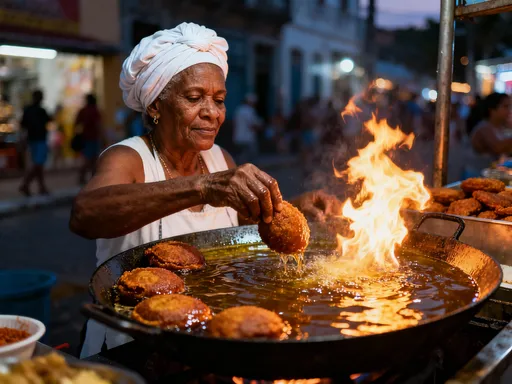
No journey through Gwangju is complete without engaging its culinary culture—a tapestry of tradition, seasonality, and warmth. At Gwangjang Market, one of Korea’s oldest continuously operating markets, the air is rich with the sizzle of street food. Vendors fry bindaetteok—crispy mung bean pancakes—on wide griddles, their edges bubbling with heat. Rows of stalls display glistening kimchi in every variation, from pale radish to fiery cabbage. I sat on a low stool at a counter and ordered a plate of tteokbokki, the spicy rice cakes served with a side of pickled radish. The vendor, a woman in her sixties with kind eyes, noticed I was eating slowly and smiled. “Good,” she said in Korean. “Food should not be rushed.”
Not far from the market, independent cafés reflect Gwangju’s artistic sensibility. Many are housed in renovated hanok or retrofitted industrial spaces, blending old and new. One favorite, nestled in a quiet alley, served hanjeongsik—a traditional full-course Korean meal featuring small dishes of marinated vegetables, grilled fish, rice, and soup. The owner explained that each component represents balance: hot and cold, spicy and mild, texture and flavor. Eating it felt like participating in a ritual, a deliberate honoring of nourishment and care.
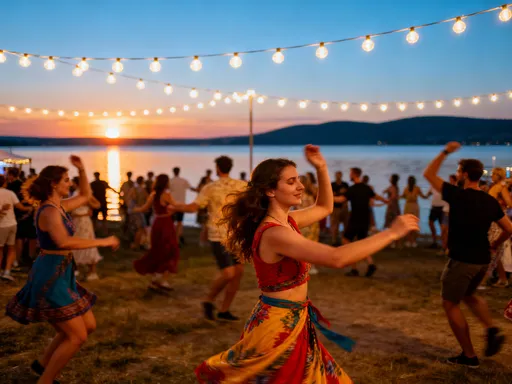
Some of my most memorable experiences were unscripted. On a rainy afternoon, I ducked into a neighborhood bakery and struck up a conversation with the baker, who offered me a sample of freshly made sweet potato bread. Later, I stumbled upon a small festival in a community park—elders practicing traditional dance, children laughing as they tried on hanbok, the scent of grilled meat filling the air. I didn’t understand every word, but I felt welcomed. These moments weren’t staged for tourists; they were real, unfolding at their own pace. And because I wasn’t rushing to the next destination, I had the space to be part of them.
Conclusion: Carrying Gwangju’s Quiet Wisdom Forward
Gwangju doesn’t shout for attention. It doesn’t need to. Its power lies in subtlety—in the way morning light touches a temple roof, in the laughter shared over a street-side meal, in the silence between footsteps on a forest trail. My week in this city taught me that travel is not about how far you go, but how deeply you see. Slowing down didn’t make my journey shorter; it made it fuller. It allowed me to move beyond observation and into connection. I returned home not with a checklist of sights, but with a renewed sense of presence.
In a world that equates speed with success, Gwangju stands as a quiet counterpoint. It reminds us that beauty often resides in the overlooked, that understanding grows through stillness, and that the most meaningful experiences unfold when we stop chasing them. As you plan your next trip, consider choosing a destination not for its fame, but for its depth. Let yourself wander without urgency. Listen more than you speak. Pause often. Because what you might miss—if you’re always in a hurry—is not just a place, but a way of being.