You Won’t Believe These Hidden Urban Gems in Alexandria
Alexandria, Egypt, is more than just ancient legends and Mediterranean views—it’s a living city with secrets tucked in plain sight. I wandered its streets not as a tourist, but as a curious explorer, and discovered urban spaces where history breathes through cracked walls and alleyway art. From forgotten courtyards to rooftop cultures, these hidden corners reveal the soul of the city. This is Alexandria beyond the guidebooks—raw, real, and quietly magical.
The City That Time Forgot – Urban Identity of Alexandria
Alexandria is a city of layers, each era leaving behind fragments of architecture, language, and lifestyle that blend into a complex urban identity. Founded by Alexander the Great in 331 BCE, it was once a beacon of Hellenistic culture and intellectual life, home to the legendary Library and Lighthouse of Pharos. Yet today’s Alexandria is not frozen in antiquity; it pulses with contemporary rhythms shaped by waves of migration, colonial influence, and Mediterranean trade. The city’s layout—broad avenues intersecting narrow alleyways, European-style buildings standing beside weathered stone homes—reflects this layered past. While many visitors come seeking relics of ancient grandeur, the true essence of Alexandria lies in how its people inhabit this historical tapestry every day.
Over the 19th and early 20th centuries, Alexandria evolved into a cosmopolitan port city, attracting Greeks, Italians, French, Jews, and Levantines who built villas along the Corniche and opened cafes that echoed with multiple languages. This multicultural imprint remains visible in the city’s architectural details: wrought-iron balconies, arched windows, and mosaic tiles that hint at a time when Alexandria was known as the “Paris of the Middle East.” However, after the mid-20th century, waves of nationalization and population shifts led to a relocalization of urban life. Many foreign residents departed, and Egyptian families moved into once-exclusive neighborhoods, adapting spaces to suit new needs and economic realities.
What emerges from this evolution is an urban fabric defined not by preservation or planning, but by adaptation. Buildings may show signs of decay, yet they remain inhabited, repurposed, and loved. Walls cracked by time are patched with makeshift materials, and courtyards once reserved for private leisure now host shared social life. This resilience forms the backbone of Alexandria’s modern identity—a city that honors its past without being trapped by it. Visitors who look beyond the surface discover that Alexandria’s charm isn’t in perfection, but in the quiet beauty of continuity, where history is not displayed behind glass, but lived in the everyday.
Corniche After Dark – The Pulse of Public Space
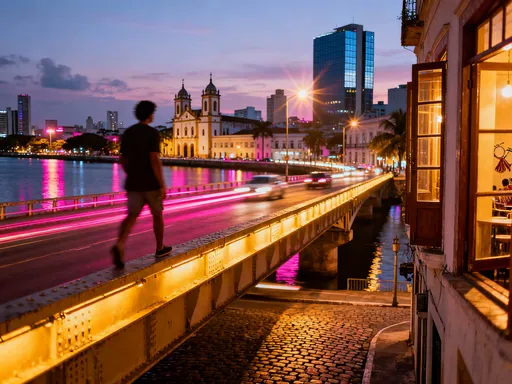
As the sun dips below the Mediterranean horizon, Alexandria’s Corniche undergoes a transformation. By day, it is a scenic drive offering panoramic sea views and glimpses of Fort Qaitbey rising from the water. But after dark, it becomes something more: a living room for the city, where people from all walks of life gather to stroll, talk, and breathe in the salty air. Benches fill with families sharing snacks, teenagers lean against railings laughing under dim streetlights, and elderly couples walk slowly arm-in-arm, savoring the cool evening breeze. Fishermen cast their lines from rocky outcrops, undisturbed by the gentle hum of conversation around them, their presence a reminder of the sea’s enduring role in the city’s rhythm.
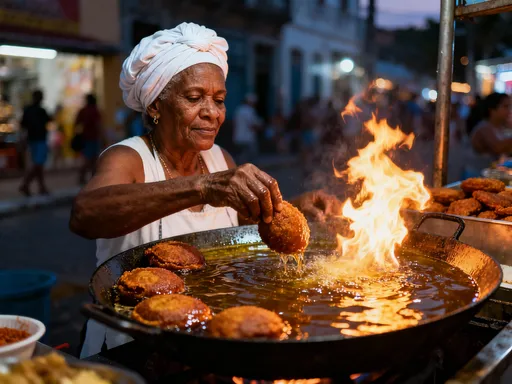
This nightly ritual reveals how Alexandrians have claimed public space as their own, even in the absence of formal recreational infrastructure. Unlike cities with sprawling parks or designated promenades, Alexandria relies on its coastline as a communal gathering point. There are no admission fees, no opening hours, and no strict rules—just an unwritten understanding that this stretch of land belongs to everyone. Children chase each other between lampposts, vendors push carts selling roasted corn and sugarcane juice, and couples find quiet corners to sit and watch the waves. It is informal, unregulated, and deeply democratic.
The Corniche after dark also reflects a cultural value deeply embedded in Alexandrian life: the importance of shared experience. In a city where private space is often limited—especially in densely populated neighborhoods—public areas become extensions of the home. The Corniche serves not just as a place for leisure, but as a stage for social connection, where generations meet, friendships deepen, and community bonds are quietly reinforced. It is a testament to how urban environments can foster belonging, even when they are not designed with intention. For the observant traveler, walking the Corniche at night offers a rare glimpse into the soul of Alexandria—not as a monument, but as a living, breathing collective.
Hidden Courtyards of Stanley – Forgotten Architecture Alive
Just a short distance from the bustling Corniche lies the neighborhood of Stanley, a quiet enclave where time seems to slow. Here, early 20th-century villas stand behind ornate iron gates, their facades softened by age and sea air. These homes were once the residences of Alexandria’s elite—foreign merchants, diplomats, and wealthy Egyptians who sought refuge from the city’s noise. Today, many of these buildings remain, though their grandeur has faded. Paint peels from columns, balconies sag slightly under years of exposure, and gardens have been overtaken by wild jasmine and bougainvillea. Yet within these seemingly neglected structures lies a hidden world of vibrant community life: the inner courtyards.
Once designed as private retreats for individual families, these courtyards have transformed into shared social spaces. In many cases, large homes have been subdivided into multiple apartments, forcing residents to negotiate common areas. What could have become a source of conflict has instead evolved into a form of urban kinship. Neighbors gather in the courtyard in the late afternoon, pulling up chairs to sip tea, exchange news, or play backgammon. Children run freely between doorways, welcomed by every household. Clotheslines crisscross overhead, and potted plants line the edges, creating a green oasis amid the stone and plaster.
These courtyards exemplify how Alexandrians adapt to urban challenges with creativity and care. With rising population density and limited access to private outdoor space, the courtyard has become a substitute for the backyard, the park, and even the living room. It is a place where privacy and community coexist, where generations interact naturally, and where the architecture of the past supports the social needs of the present. Despite the lack of official preservation efforts, these spaces endure—not because they are protected, but because they are needed. They are not museum pieces; they are living rooms with roofs open to the sky, testaments to the quiet resilience of urban life in Alexandria.
Rooftop Culture – The Skyline’s Best-Kept Secret
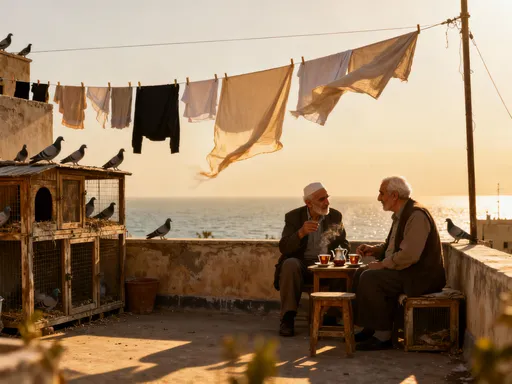
In a city where space is at a premium, Alexandrians have learned to look upward. Across the city’s apartment buildings, flat rooftops serve as hidden sanctuaries, offering relief from the summer heat and a place to gather beyond the confines of small homes. These rooftops are not officially designated as living spaces, yet they are deeply integrated into daily life. In the evenings, families carry chairs and rugs upstairs to enjoy the sea breeze, watch the sunset, or simply escape the noise of the streets below. Teenagers meet in small groups to listen to music or play cards, while older residents sip mint tea and reflect on the day. The rooftop is not just a physical space—it is a cultural institution.
What makes rooftop culture particularly remarkable is its multiplicity of uses. By day, clothes dry on lines strung between chimneys and water tanks, fluttering like flags in the wind. Pigeon coops, carefully constructed from wood and wire, dot the edges of many roofs, home to birds raised for sport and companionship. Some families grow herbs or tomatoes in repurposed containers, turning concrete into a modest garden. At night, the rooftops transform again—into intimate gathering spots where conversations flow freely, unobserved by the outside world. These moments of connection are especially valuable in a society where private space for socializing is limited.
The rooftop also reflects a broader truth about Alexandria: that life flourishes in the in-between spaces. When formal infrastructure fails to provide adequate housing, recreation, or community centers, people create their own solutions. The rooftop is not regulated, not policed, and often not even mentioned in official city plans—yet it plays a vital role in the emotional and social well-being of residents. For visitors, gaining access to a rooftop—even as a guest—offers a rare and authentic perspective on Alexandrian life. It is a reminder that the city’s most meaningful experiences are not always found at street level, but in the quiet spaces above, where the sky meets the sea and neighbors become family.
Street Art in Unexpected Corners – Urban Expression Rising
Wander through the alleys of Attarine or the slopes of Mansheya, and you may stumble upon something unexpected: a burst of color on a crumbling wall, a poetic phrase in elegant Arabic calligraphy, or a satirical sketch commenting on daily life. This is Alexandria’s emerging street art scene—a quiet but growing movement led by young artists reclaiming neglected urban spaces. Unlike the formal galleries or state-sponsored murals, this art appears spontaneously, often without permission, turning forgotten corners into open-air canvases. It is not always polished, but it is honest, reflecting the hopes, frustrations, and humor of a new generation.
What sets Alexandrian street art apart is its deep connection to heritage and language. Many pieces incorporate classical Arabic script, blending poetry with visual design. Others reference Pharaonic symbols, Greco-Roman motifs, or Islamic geometric patterns, creating a dialogue between past and present. Some artists use satire to comment on urban challenges—overcrowding, waste management, or the tension between modernization and tradition. A mural might depict a fisherman holding a smartphone, or a lion from ancient Alexandria wearing sunglasses, watching the city change around him. These images do more than decorate; they invite passersby to pause, reflect, and see their city anew.
While not officially sanctioned, this movement has gained quiet acceptance among residents. Some building owners allow artists to paint their walls, recognizing that color brings life to otherwise dull surfaces. Others join in, adding small touches or sharing photos on social media. In a city where public expression is often constrained, street art becomes a subtle act of ownership—a way for citizens to say, “We are here, we see you, and this space matters.” Though fragile and sometimes temporary, these artworks contribute to Alexandria’s evolving identity, proving that culture is not only preserved in museums, but also created in the streets, one brushstroke at a time.
From Tram Lines to Foot Traffic – Navigating the City’s Flow
Getting around Alexandria is an experience in itself—a daily dance of patience, improvisation, and local knowledge. The city’s public transportation system centers on its aging tram network, one of the oldest in Africa, where wooden-seated cars rattle along fixed routes from Ramleh to the eastern suburbs. While slow and often overcrowded, the trams remain a vital artery, especially for students, workers, and elderly residents who rely on affordable transit. Alongside them, a fleet of minivans—privately operated, color-coded, and always in motion—fill the gaps, weaving through traffic with a rhythm known only to their drivers. Together, these systems form a patchwork network that, while unreliable by international standards, functions through sheer persistence.
Yet perhaps the most revealing aspect of Alexandria’s mobility is how people move beyond formal transport. Sidewalks are often uneven or blocked, forcing pedestrians to navigate around parked cars, street vendors, or construction debris. In response, Alexandrians have developed a network of informal pathways—shortcuts through apartment lobbies, market alleys, and even private courtyards known only to locals. These routes are not marked on any map, but they are essential for daily life. A mother carrying groceries might duck through a building’s ground floor to avoid a busy intersection; a student might cut through a fish market to reach school faster. These micro-journeys reflect a deep understanding of the city’s hidden logic.
This adaptive movement shapes human interaction in profound ways. When people share narrow passages, they must negotiate space with eye contact, gestures, and small courtesies. A nod, a smile, a step aside—these micro-moments build a sense of mutual recognition. In a densely populated city where privacy is scarce, these interactions foster a quiet solidarity. The way Alexandrians navigate their city is not just about efficiency; it is a form of urban choreography, where movement becomes a language of its own. To walk through Alexandria is to participate in this rhythm, to learn its pauses and pulses, and to understand that the city’s soul is carried not just in its monuments, but in the flow of its people.
Preserving the Unplanned – Why These Spaces Matter
As Alexandria continues to grow and modernize, there is increasing pressure to “clean up” its urban landscape—replacing old buildings with high-rises, paving over informal spaces, and standardizing public areas. While development brings necessary improvements, it also risks erasing the very elements that give the city its character. The hidden courtyards, rooftop gatherings, alleyway art, and adaptive pathways are not flaws to be corrected; they are expressions of resilience, creativity, and community. These unplanned spaces are where Alexandria’s culture is lived, not performed. They are the antithesis of sterile, tourist-friendly zones, offering instead a raw and authentic experience of urban life.
Preserving these spaces does not require grand interventions or expensive restoration projects. In many cases, the best approach is simply to leave them be—to resist the urge to over-regulate or commodify. Local governments can support low-impact strategies such as community-led maintenance, small grants for courtyard improvements, or legal recognition of informal uses like rooftop access. Zoning policies could protect mixed-use neighborhoods from wholesale redevelopment, ensuring that historic areas evolve without losing their soul. Most importantly, preservation must involve residents—not as subjects of policy, but as partners in shaping their environment.
The value of these spaces extends beyond aesthetics. They provide emotional refuge, social connection, and a sense of ownership in a rapidly changing world. For older generations, they are links to memory and tradition; for younger ones, they are spaces of freedom and self-expression. In a city where formal institutions often fall short, these organic spaces fill the gaps, offering what planners cannot: a sense of belonging. To honor Alexandria’s heritage is not only to protect its ancient lighthouse or restored libraries, but to recognize that the city’s true legacy is carried in the everyday acts of its people—cooking on a rooftop, painting a wall, sharing tea in a courtyard.
Alexandria’s true character isn’t found in grand monuments, but in the quiet hum of everyday life—where people reshape their environment with creativity and care. These hidden urban spaces tell a deeper story of resilience, connection, and identity. To experience Alexandria fully, one must look beyond the past and embrace its present pulse. The city’s future lies not in erasing the old, but in honoring the spaces where life truly unfolds.